
Embark on a journey of home improvement as we delve into the world of repairing siding. From identifying signs of damage to mastering repair techniques, this guide is your go-to resource for all things siding repair.
Understanding Siding Repair
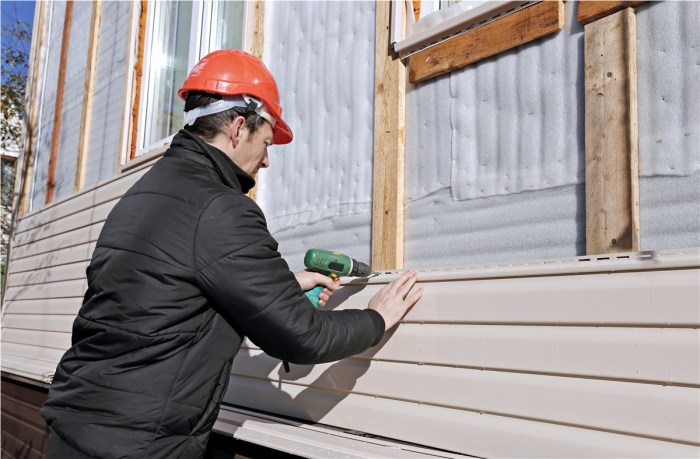
When it comes to siding repair, it’s essential to understand the common types of siding materials used in homes, recognize signs of damage, and grasp the importance of timely repairs to prevent further issues.
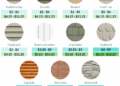
Types of Siding Materials
There are several common types of siding materials used in homes, including:
- Vinyl: A popular choice due to its affordability, durability, and low maintenance requirements.
- Wood: Provides a classic look but requires more maintenance to prevent rot and decay.
- Fiber Cement: Known for its durability and resistance to fire, moisture, and insects.
- Aluminum: Lightweight and resistant to corrosion, but can dent easily.
- Brick: Durable and low maintenance, but more costly compared to other materials.
Signs of Siding Damage
It’s crucial to be able to identify signs of siding damage, such as:
- Cracks or holes in the siding
- Warped or buckling siding panels
- Fading or discoloration of the siding material
- Mold or mildew growth on the siding surface
- Increased energy bills due to poor insulation from damaged siding
Importance of Timely Siding Repair
Timely siding repair is essential to prevent further damage to your home, including:
- Preventing water infiltration that can lead to mold, rot, and structural damage
- Preserving the curb appeal and value of your home
- Ensuring proper insulation to maintain energy efficiency
- Preventing pests from entering your home through damaged siding
Tools and Materials for Siding Repair
When it comes to repairing siding, having the right tools and materials is crucial to ensure the job is done effectively and safely. Here, we will discuss the essential tools required, the different types of materials needed based on the siding material, and provide safety tips for using these tools.
Essential Tools for Siding Repair
- Siding removal tool or pry bar
- Hammer
- Nails or screws
- Caulk and caulk gun
- Level
- Tape measure
- Saw
- Ladder
Materials Needed Based on Siding Material
Depending on the type of siding you have, you will need different materials for repair:
- Vinyl Siding:Replacement panels, vinyl patching material, color-matched caulk.
- Wood Siding:Wood panels, wood putty, paint or stain.
- Fiber Cement Siding:Fiber cement panels, caulk, paint.
- Aluminum Siding:Aluminum panels, aluminum patching material, paint.
Safety Tips for Using Tools
- Always wear safety goggles and gloves when working with tools to protect your eyes and hands.
- Use caution when using a ladder and ensure it is stable and secure before climbing.
- Follow manufacturer instructions for each tool to prevent accidents and ensure proper usage.
- Keep your work area clean and organized to avoid tripping hazards.
- Store tools properly after use to prevent injuries and damage.
Preparing for Siding Repair
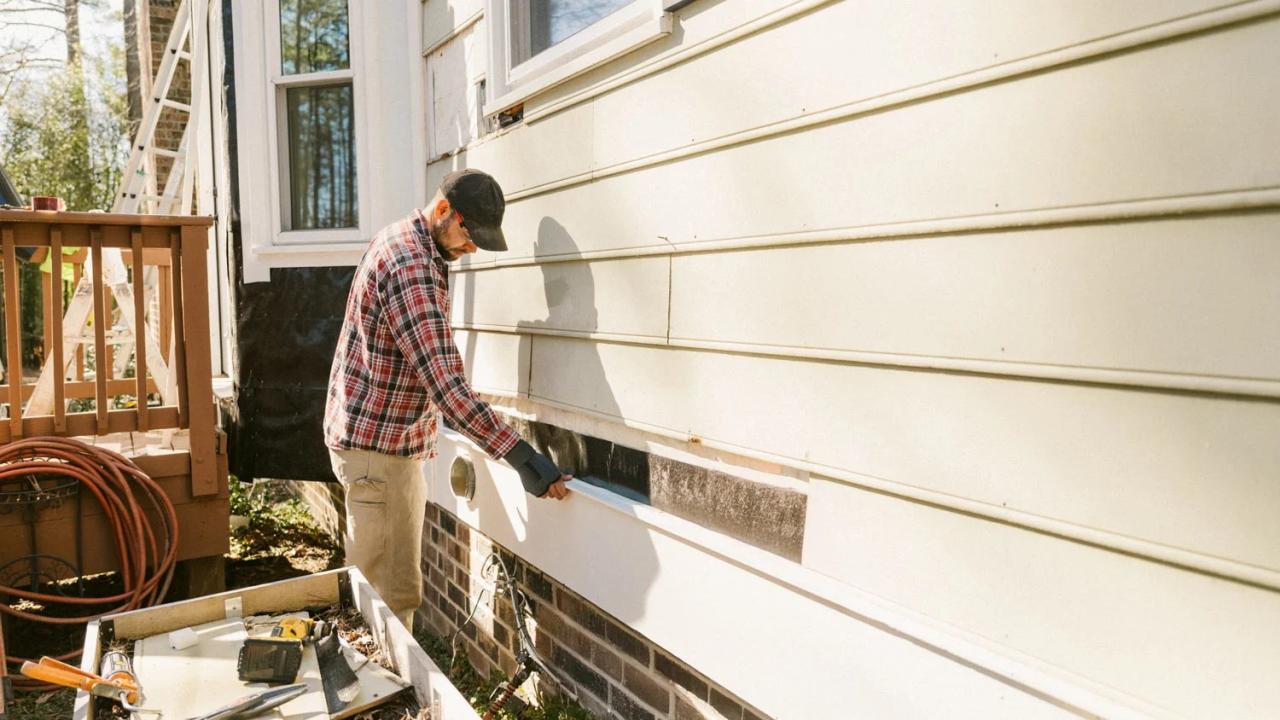
Before starting any siding repair project, it is crucial to properly prepare the work area to ensure a safe and successful outcome. This involves inspecting the extent of the damage, accessing elevated areas securely, and gathering the necessary tools and materials for the job.
Inspecting the Extent of Damage
Before beginning any repairs, carefully inspect the siding to determine the scope of the damage. Look for cracks, holes, rot, or any other signs of wear and tear that may need attention. This will help you assess the materials and time needed for the repair.
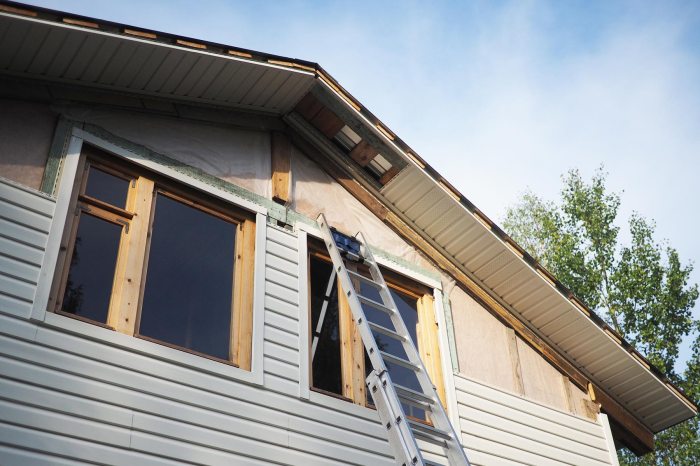
Safely Accessing and Working on Elevated Areas
When working on siding located in elevated areas, such as upper levels of a building, it is important to prioritize safety. Use a sturdy ladder that is properly secured and positioned on a flat surface. Avoid overreaching and always have a spotter present to assist if needed.
Additionally, consider using scaffolding for larger repair projects to provide a stable platform for working at heights.
Siding Repair Techniques
Repairing common siding issues like cracks or holes requires a systematic approach to ensure a seamless finish that restores both the appearance and functionality of the siding. Here is a step-by-step process for repairing these issues, as well as a comparison of repair methods for different siding materials and tips for matching colors and textures when replacing siding sections.
Repairing Common Siding Issues
- Clean the damaged area: Start by cleaning the area around the crack or hole to remove any dirt, debris, or loose paint.
- Apply caulk or filler: Use a suitable caulk or filler to fill in the crack or hole, ensuring it is smooth and level with the rest of the siding.
- Sand and paint: Once the caulk or filler has dried, sand the area to smooth it out before painting to match the color of the existing siding.
Comparison of Repair Methods for Different Siding Materials
| Siding Material | Repair Method |
|---|---|
| Vinyl Siding | Cracks can be repaired using specialized vinyl siding repair kits that include patches and adhesives. |
| Wood Siding | Small holes can be filled with wood putty, while larger damaged areas may require replacement boards. |
| Fiber Cement Siding | Cracks can be filled with caulk or cement patching compound, followed by sanding and painting. |
Tips for Matching Colors and Textures
- Take a sample: Before purchasing replacement siding, take a sample of the existing siding to the store to find the closest match in color and texture.
- Blend the paint: If painting is required to match the siding color, blend different shades to achieve a seamless transition between old and new sections.
- Consider professional help: If matching colors and textures proves difficult, consult a professional to ensure a perfect match.
Maintaining and Extending Siding Lifespan
Proper maintenance is key to extending the lifespan of your siding and preventing the need for frequent repairs. Weather conditions play a significant role in the wear and tear of siding, so taking proactive measures can help prolong its durability.
Regular Cleaning and Inspection
- Regularly clean your siding with mild detergent and a soft brush to remove dirt, grime, and mildew.
- Inspect your siding annually for any signs of damage, such as cracks, holes, or warping.
- Address any issues promptly to prevent them from worsening and causing further damage.
Protecting Against Moisture
- Ensure that your gutters are clean and properly functioning to prevent water from seeping behind the siding.
- Seal any gaps or joints in the siding to prevent moisture intrusion.
- Consider applying a water-resistant coating to provide an extra layer of protection against moisture.
Trimming Vegetation and Trees
- Trim back any trees or bushes near your home to prevent branches from rubbing against the siding.
- Avoid allowing ivy or other climbing plants to grow on the siding, as they can trap moisture and lead to decay.
Regular Painting and Sealing
- Repaint your siding every few years to protect it from the elements and keep it looking fresh.
- Apply a quality sealer to prevent water penetration and UV damage.
- Choose a paint color that reflects sunlight to minimize heat absorption and reduce thermal stress on the siding.
Closing Summary
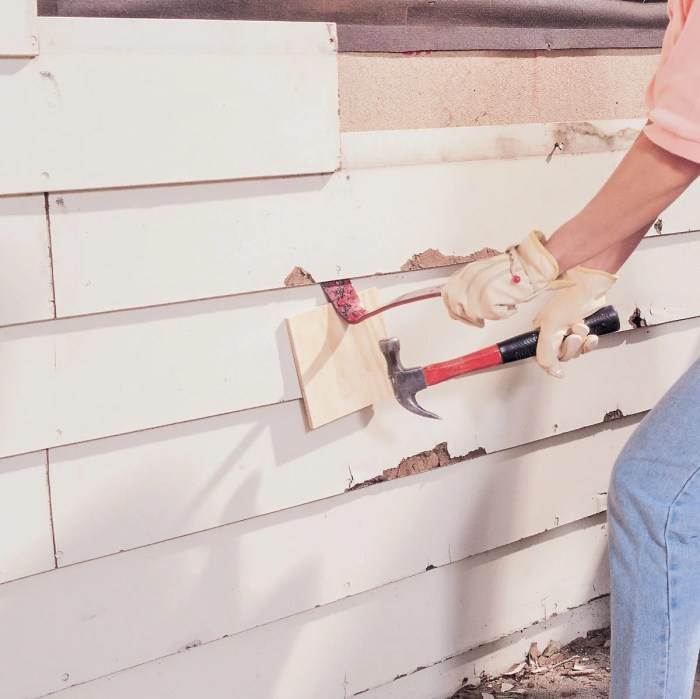
As we conclude our exploration of repairing siding, remember that timely repairs and proper maintenance are key to ensuring the longevity of your home’s exterior. Armed with the knowledge from this guide, you can tackle siding issues with confidence and keep your home looking its best for years to come.
FAQ Overview
What are the common signs of siding damage?
Common signs include cracking, warping, rotting, or loose siding panels.
What tools are essential for repairing siding?
Essential tools include a hammer, pry bar, circular saw, tape measure, and caulking gun.
How can weather conditions impact the lifespan of siding?
Extreme weather conditions like heavy rain or prolonged exposure to sunlight can deteriorate siding faster.
How do you safely access elevated areas of siding for repairs?
Use a stable ladder and ensure someone is there to assist you when working on elevated areas.